
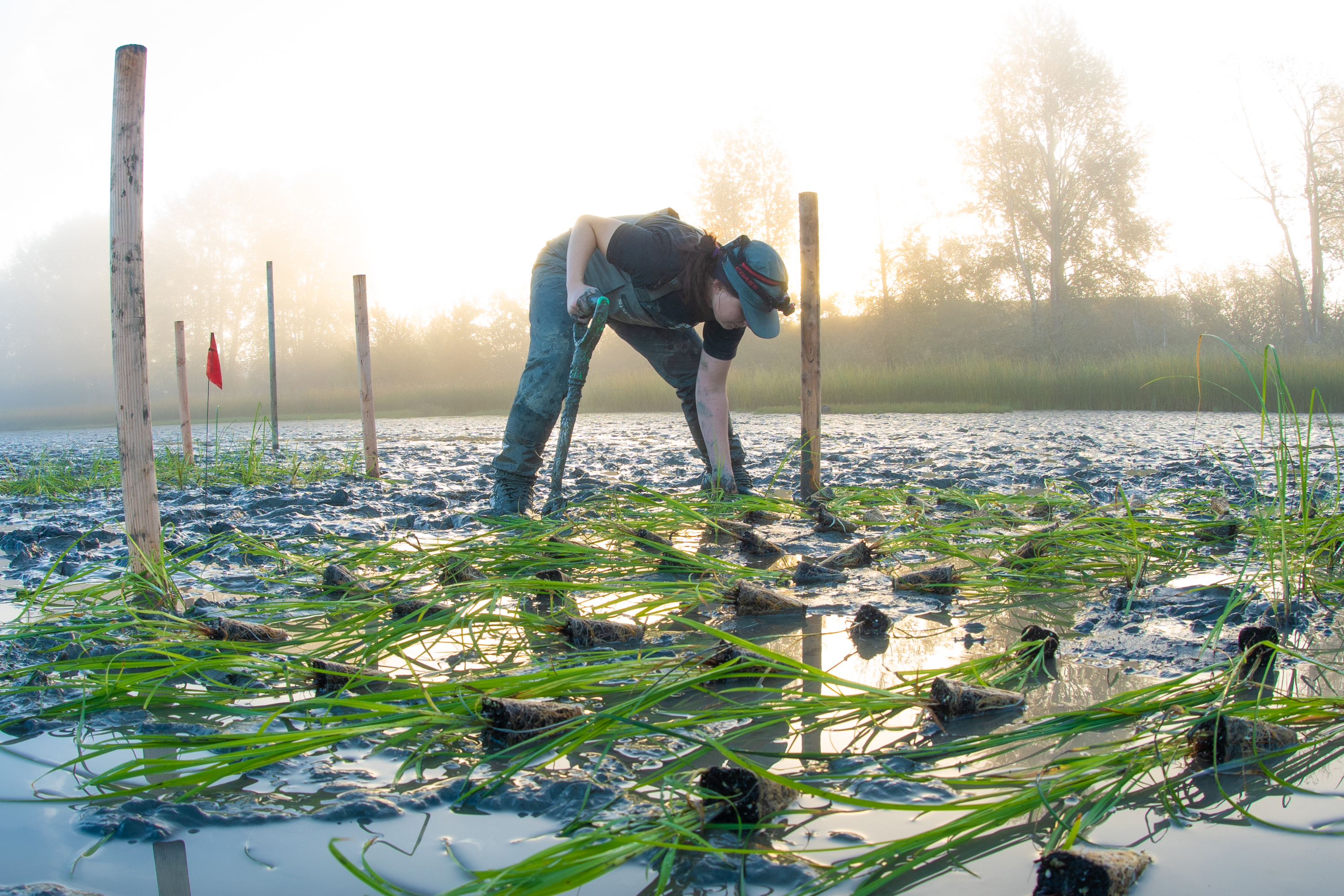
Image: A field crew member plants native sedges along the Tilbury Island foreshore. These plantings are intended to help slow local water movement in the Fraser River, encouraging sediment to settle and accumulate. Over time, this can support the gradual expansion of marsh habitat. The added vegetation also increases habitat complexity, providing shelter and foraging opportunities for a range of species, including juvenile salmon as they migrate downstream toward the ocean.
Photo credit: Fernando Lessa
The Fraser River is a river shaped by motion. The motion of water, sediment, people, fish, watercraft, and stories. Flowing from the Rocky Mountains to the Salish Sea, it connects glaciers to tidal flats, salmon to forests, and communities across generations. Its designation as a Canadian Heritage River recognizes its deep cultural, economic, ecological, and historical significance, and for Ducks Unlimited Canada (DUC), the Fraser is also a living classroom.
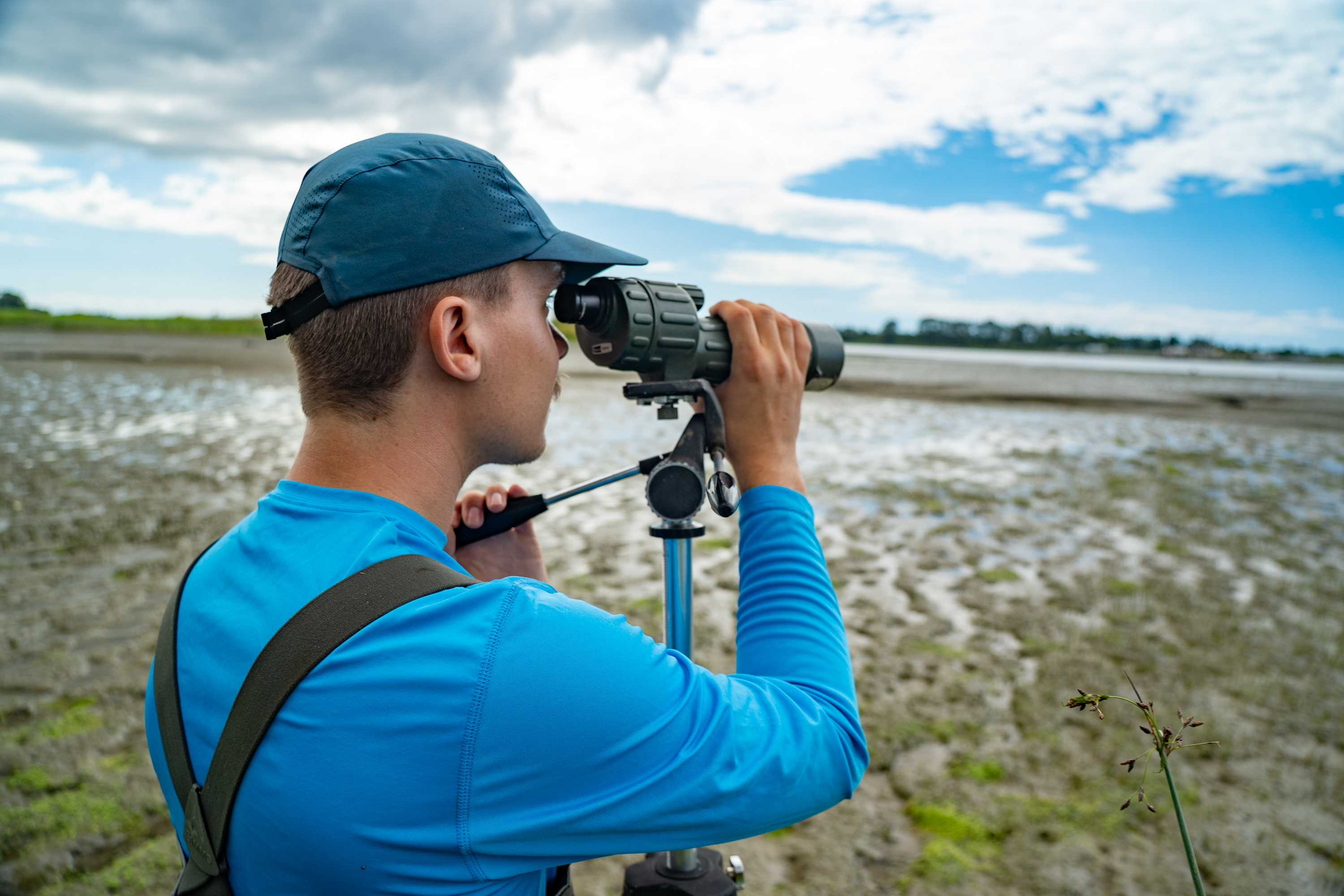
Image: Ducks Unlimited Canada summer field crew member Brogan Neufeld surveys the Tilbury Island foreshore along the Fraser River during low tide, looking for shorebirds
Photo credit: Fernando Lessa
Across the lower reaches of the river, wetlands and marshes have formed, shifted, disappeared, and re-emerged for centuries. These ecosystems buffer floods, filter water, store carbon, and provide critical habitat for salmon, waterfowl, and so many other species. Yet over the last hundred years, more than 70 percent of estuarine wetlands in the Fraser River Estuary have been lost or altered.
Today, DUC is working with partners to help write a new chapter; one that listens closely to what the river itself has to say.
One of the most exciting efforts underway is the Process-Based Marsh Establishment Pilot Project (ProMEPP). Led by DUC in collaboration with researchers at the University of British Columbia and supported by Fisheries and Oceans Canada and the Province of British Columbia, ProMEPP asks a simple but powerful question: Can we work with natural processes to accelerate tidal creation?
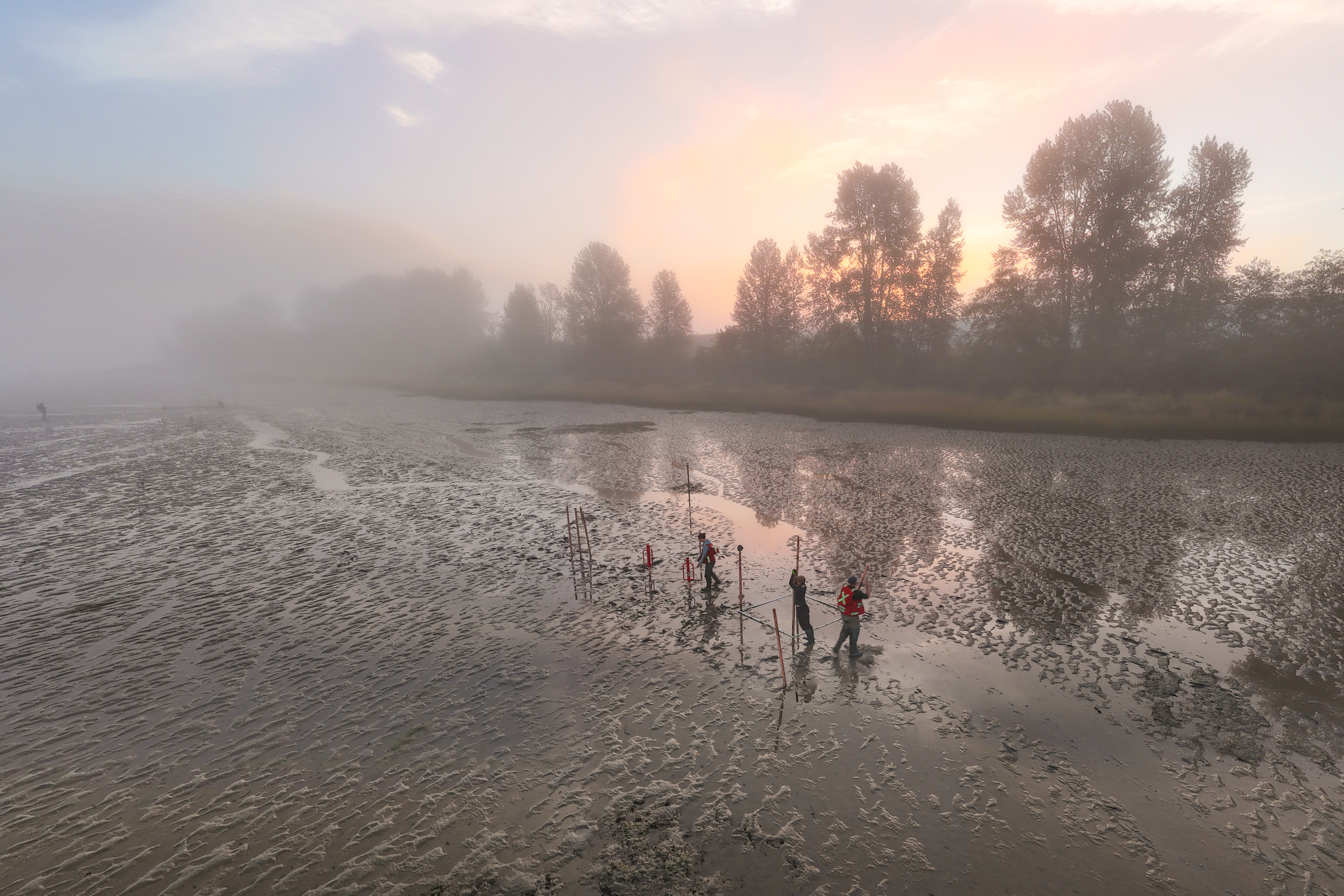
Image: Field crew members construct a goose exclosure at sunrise during low tide - these exclosures, made of natural materials, protect young plants which are a popular food for Canada Geese. By blocking access for Canada Geese, these plants are given a chance to establish strong roots and multiply, creating juvenile salmon habitat and supporting the broader food web.
Photo credit: Fernando Lessa
Past practices have seen interventions that dictated where habitat should go on the river, but ProMEPP flips the script on that. Learning from the river on where processes are already building up sediment, the project involves a process-based approach where field crews construct modest structures of untreated wood to simply slow down water, allowing sediment to build up, and providing a raised foundation for tidal marsh plants to grow upon.
Early field trials at sites like Tilbury Island along the river and in the heart of Metro Vancouver’s urban population, are already testing low-cost, nature-based techniques from untreated timber pile walls to native plantings that work with the river’s sediment and tides instead of against them. What’s learned here will translate into lessons that could extend well beyond the Fraser.
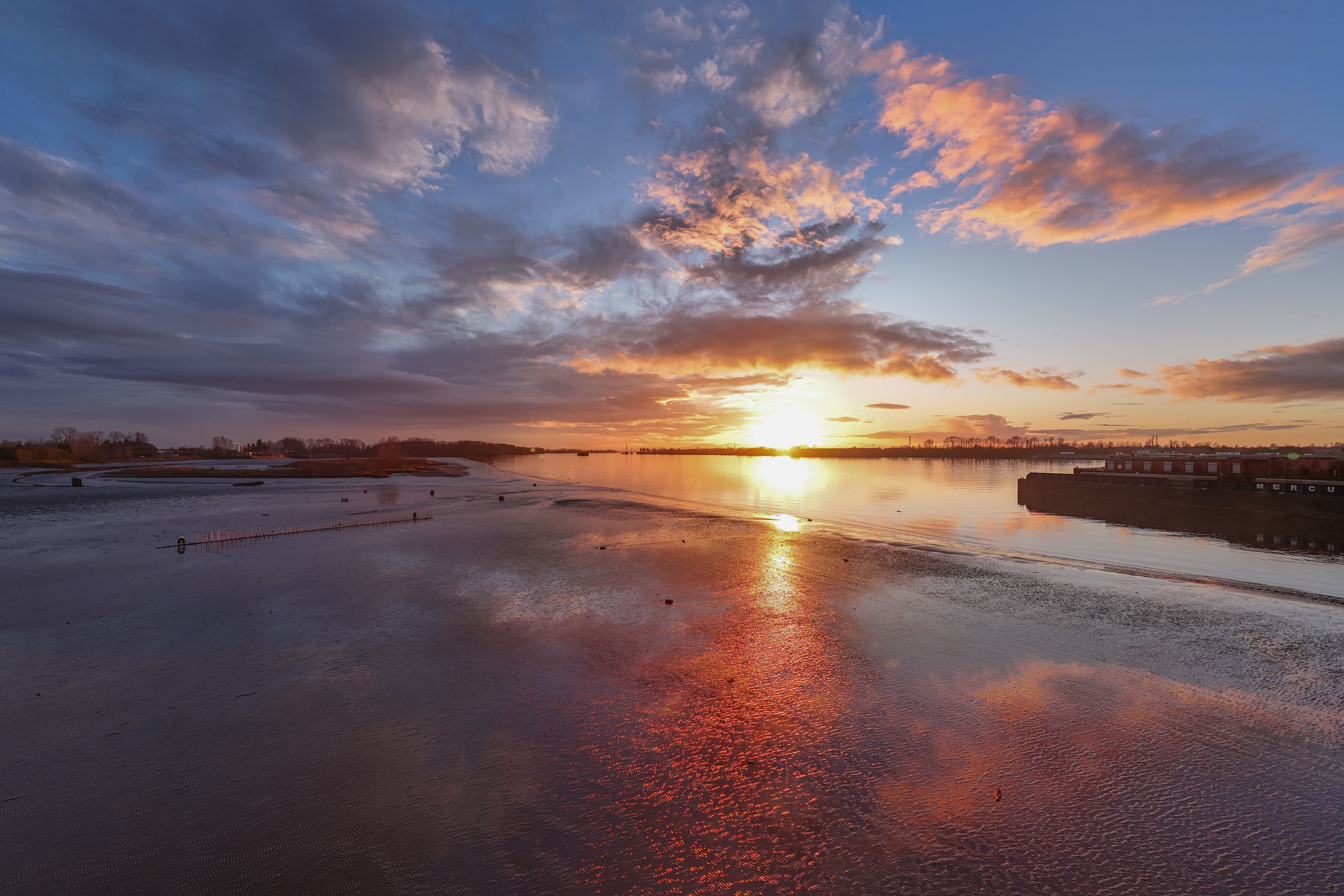
Image: Sunset at Tilbury Island, on the middle left of the image you can see a brushwood dam being constructed to create a natural buffer to help accumulate sediment as the tides shift. Photo was taken during construction.
Photo credit: Fernando Lessa
ProMEPP builds on a long legacy of stewardship along this Heritage River. At Sturgeon Bank, DUC and partners have successfully reused dredged sediment to rebuild intertidal habitat, showing how working with natural processes can strengthen coastlines while supporting salmon and migratory birds. DUC is working to showcase sediment as a valuable local resource and seize the opportunity for circular thinking guided by the river itself. Sharing what has been learned at Sturgeon Bank can shift how we care for rivers.
These efforts move from controlling rivers to collaborating with them. As changing climate brings higher flows, rising seas, and increasing uncertainty, the Fraser River reminds us that resilience is built over time through observation, partnership, and respect.